



A Find Your Path gear guide.
The running vest is the piece of gear that turns a run into a mission: water, food, a jacket and your phone, all carried so close to your body that, fitted right, none of it moves. Fitted wrong, it's a bouncing, chafing regret. Here's how to get it right the first time.
Do you need a vest at all?
Under about an hour with no mandatory kit, you probably don't. A belt carries a phone, keys and a couple of gels without touching your shoulders, and a handheld flask covers hydration for shorter efforts. The vest earns its place when you need more than about a litre of fluid, real food, spare layers, or when a race's mandatory kit list simply won't fit anywhere else.
Capacity: the three broad classes
Race vests (4–6 L) carry two soft flasks up front and the minimum behind, built to be light and forgotten. Training and ultra vests (8–12 L) are the sweet spot for most trail runners here: room for a jacket, food and first aid without turning into a daypack. Fastpacks (15 L+) blur into multi-day territory (sleeping kit, overnight missions) while still moving like running gear. If you're choosing one vest to do everything, the 8–12 L class is usually the honest answer.
Bottles up front, bladder out back
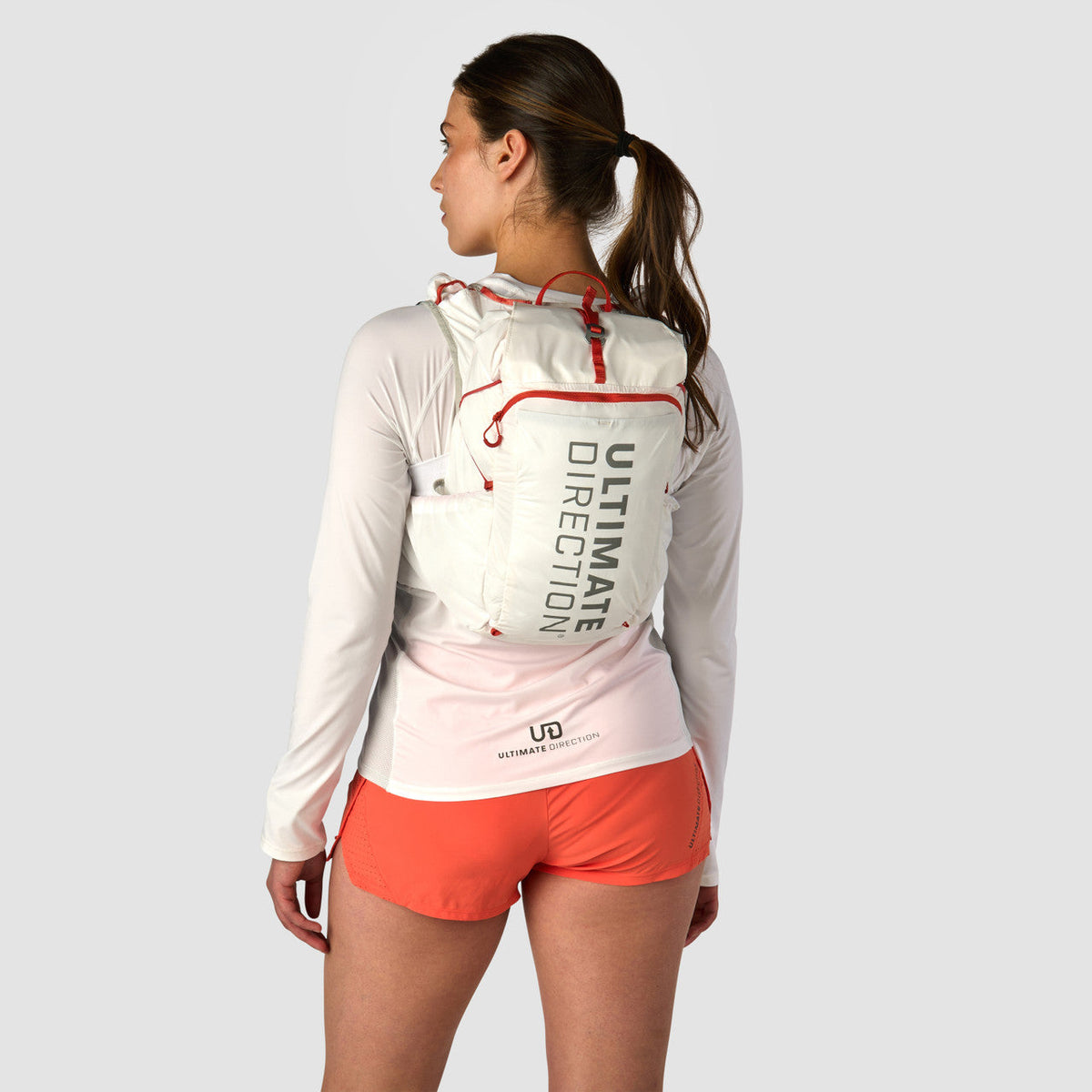
Modern vests are built around two soft flasks on the chest: you can see how much you've drunk, refill fast at streams and aid stations, and the weight rides high and stable. A rear bladder adds capacity for hot days and long gaps between water, at the cost of slower refills and harder tracking. Ultimate Direction (who started the running-vest category) build bottle-forward as a matter of principle, and most of the industry has followed them there.
Fit: the bounce test
A vest should fit like clothing, not luggage. Load it realistically in the shop (full flasks, a jacket), then run on the spot and throw in a few exaggerated arm swings. Nothing should slap, sway or ride up. Check that side straps adjust in both directions, that you can reach flasks and pockets without dislocating anything, and that there are no seams landing where a heart-rate strap or sports bra already sits. Sizing is usually by chest measurement and differs between men's, women's and unisex cuts. Women's-specific vests aren't a marketing exercise; the geometry genuinely differs.
Mandatory kit changes the maths
If you're racing, read the mandatory kit list before you choose capacity. Seam-sealed jacket, thermal layer, first aid, whistle and survival blanket fill a 5 L race vest fast. Pack it all once at home, then decide. Our ultra essentials collection gathers the usual suspects, and Gear Compare lines up vest capacities and weights side by side.
Care, and making it last
Rinse flasks and bladders after anything other than water, dry them open, and hand-wash the vest occasionally: sweat salt stiffens fabric and corrodes zips. A good vest is a five-plus-year purchase; ten minutes of care after big days keeps it that way.
Ready to look? Start with the running vest range, or book a fitting in Taupō and we'll load one up properly with you.


Leave a comment
This site is protected by hCaptcha and the hCaptcha Privacy Policy and Terms of Service apply.