
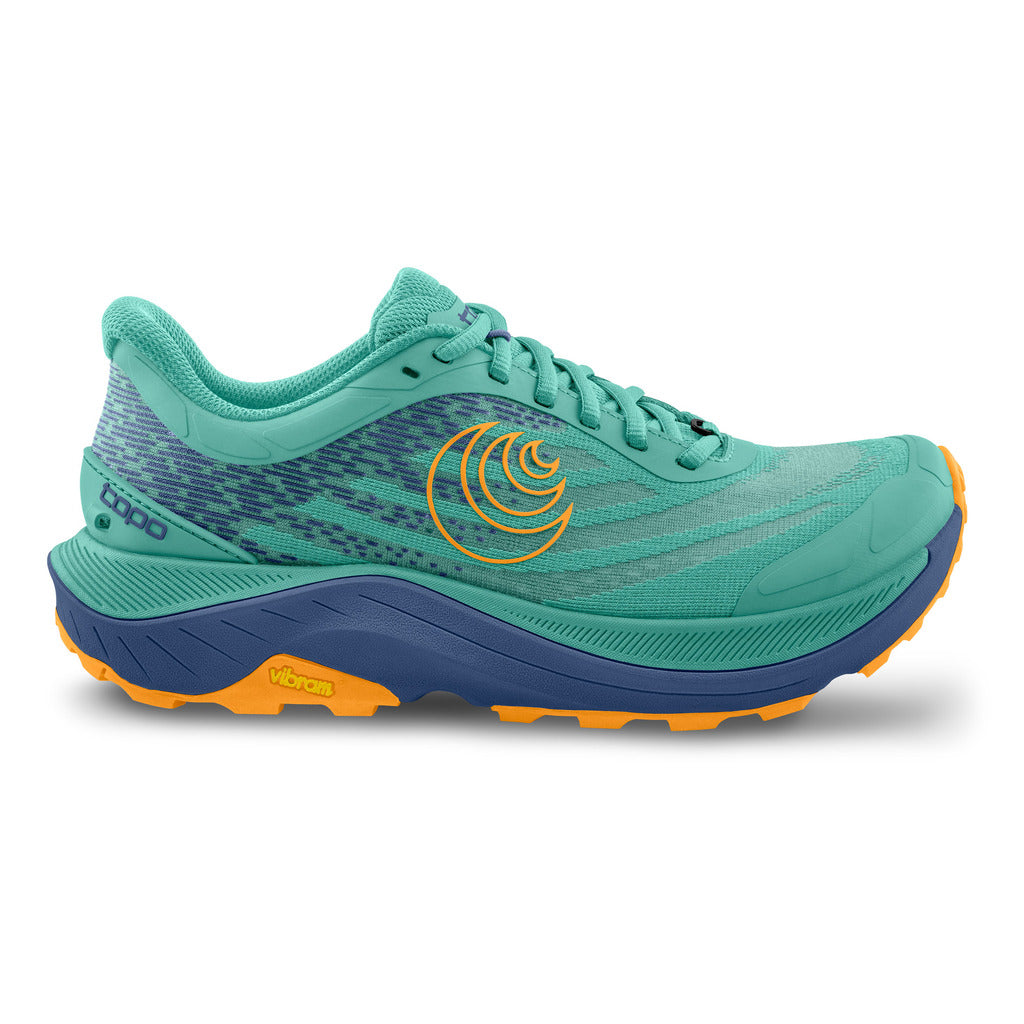



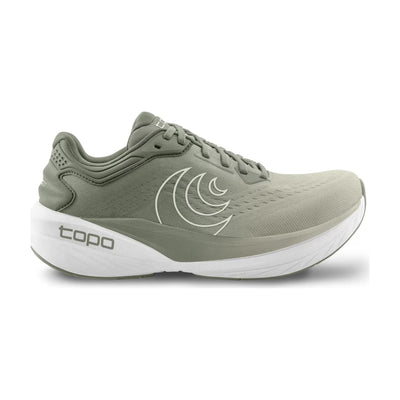
Every Topo shares the same starting point: a toe box shaped like a foot, a secure midfoot, and a low, natural drop. That's the brand's whole argument. Choosing between Topo road models is really a question about your miles: how far, how fast, and how much cushioning you want between you and the seal.
Start with how the shoe will earn its keep
Most of my running is easy miles. Look at the max-cushion daily trainers: Phantom is the plush workhorse of the range, and Atmos takes the same idea further with a broad, stable platform under a big stack. Both run a 5 mm drop, so they feel natural without asking your calves to do anything heroic.
I want to feel the ground. Magnifly is the zero-drop road trainer: heel and forefoot sit level, cushioning stays moderate, and your foot does more of the work. If you're coming from a traditional 10–12 mm shoe, treat it as a destination, not a first stop: transition gradually.
Tempo days and intervals. Cyclone is the light, fast one: less shoe, more response. Plenty of people race shorter distances in it too.
Long race days. Specter carries the biggest, most modern midsole in the road line-up: a high-stack trainer built for eating kilometres when you still want Topo's fit up front.
The fit rules don't change
Whichever model you pick: your longest toe wants a thumb's width of room, the midfoot should feel held (foot-shaped is not the same as sloppy), and feet are biggest at the end of the day: try shoes on then. Our Size & Fit Guide covers measuring properly, and every product page lists drop, stack, weight and cushioning with a plain-English line under each number so you know what it means in practice.
Still between two models?
That's what Gear Compare is for: put them side by side and the differences stop being marketing and start being millimetres and grams. Or come into the showroom in Taupō and run in both; that settles it fastest of all.


Leave a comment
This site is protected by hCaptcha and the hCaptcha Privacy Policy and Terms of Service apply.