
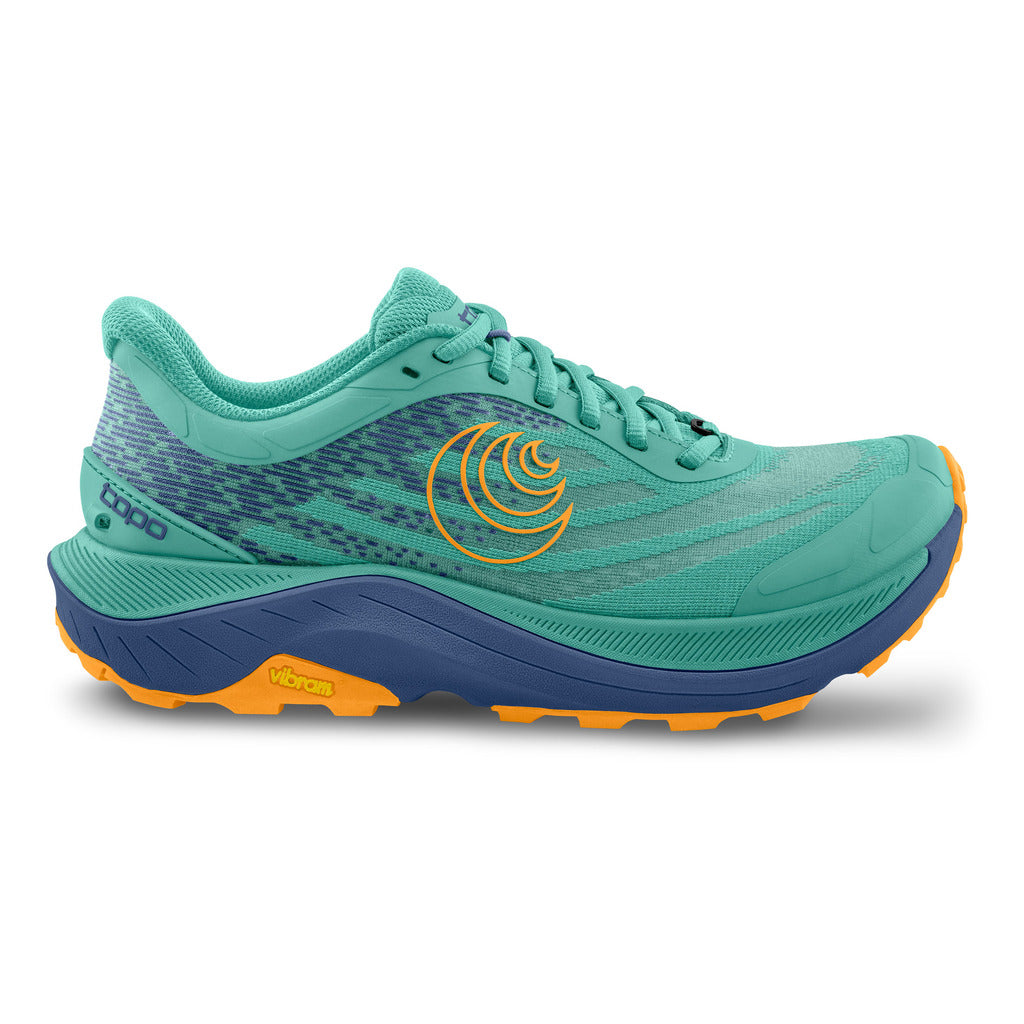




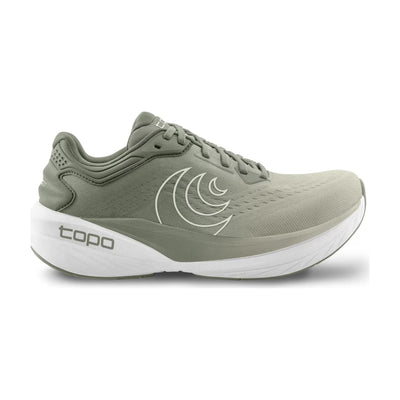
Drop is the height difference between your heel and forefoot inside the shoe, in millimetres. A traditional trainer sits around 10–12 mm; the Topo range runs from 5 mm down to zero. It's one number, but it changes how your body shares the work of running.
What changes as drop comes down
Lower drop tilts you toward a flatter, more natural foot position. Load shifts away from the knees and hips and toward the calves and Achilles. Many runners find their stride shortens slightly and their footstrike quietens. None of this makes a shoe automatically faster or "more correct". It's a different distribution of work, not a free upgrade.
Who tends to get on well with it
Runners who like ground feel and a quieter stride; people with cranky knees who want to move load elsewhere; anyone pairing it with a wide toe box for the full natural-position argument. Zero drop, heel and forefoot dead level, as in the Magnifly on road or the Pursuit on trail, is the end point of that road. Moderate 5 mm models like Phantom and Cyclone are the friendly middle: noticeably natural, rarely a shock.
Who should take it slowly
If your Achilles or calves are already grumpy, or every previous shoe you've owned was 10 mm-plus, don't jump straight to zero. Drop down in stages, keep early low-drop runs short, and expect your calves to notice for a few weeks: that's adaptation, not injury. Persistent sharp pain is different: that's a professional's job, not a shoe's.
Reading the number on our pages
Every footwear page here lists Drop in the specs with a plain-English line underneath, so "0 mm" or "5 mm" comes with context, not homework. Put two models side by side in Gear Compare and the geometry differences are laid out row by row, or come run in both at the showroom.



Leave a comment
This site is protected by hCaptcha and the hCaptcha Privacy Policy and Terms of Service apply.