
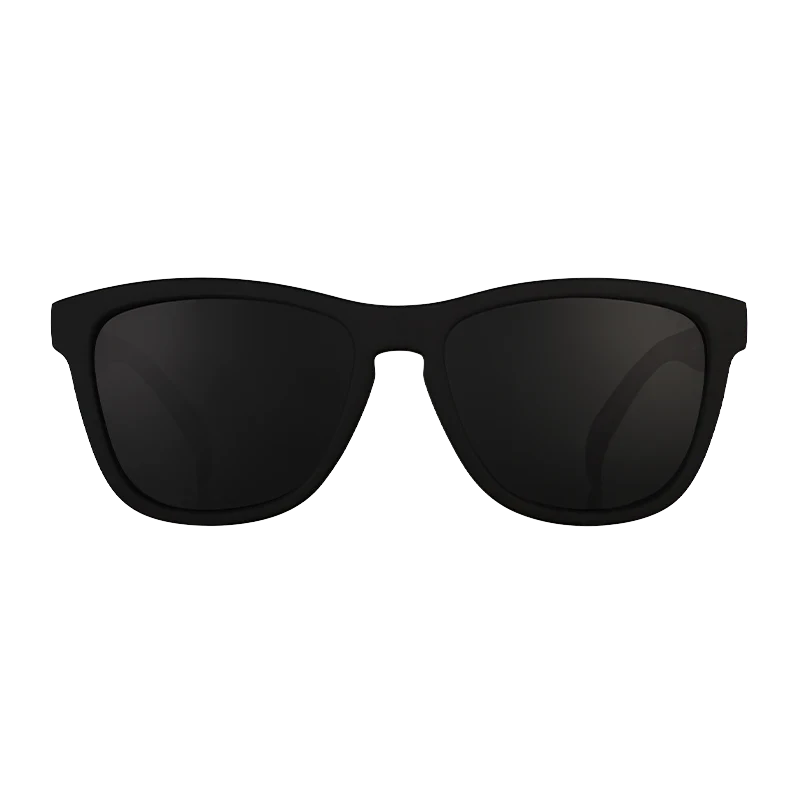



Every goodr in the range shares the same working parts: polarised UV400 lenses, and a grippy, featherweight frame built not to slip when you sweat or bounce when you run. So choosing between them isn't about performance tiers. It's about the shape sitting on your face.
The shapes, plainly
OGs are the classic: a medium rectangular frame that suits the widest spread of faces. If you're buying your first pair blind, start here. It's the shape most people end up in.
Circle Gs swap the rectangle for a rounder lens. Slightly more fashion-lean, and often the pick for narrower faces that find bigger frames overwhelming.
BFGs are the big ones: built for larger heads, with a wider frame and more coverage. If standard sunnies leave temple marks or feel like they're perching rather than fitting, this is your lane.
LFGs bring a performance-forward running profile: coverage and lock-down first.
What "fit" means for running sunnies
Three checks: the nose piece sits without pinching, the arms grip above your ears without pressure points, and when you shake your head hard, nothing moves. Weight matters too (all of these are light enough to forget), but grip is what separates running eyewear from fashion eyewear. Every product page lists lens, frame fit and polarisation in the specs, and the frame-and-lens colour dots on our product cards show you each colourway at a glance.
Can't decide between two?
Gear Compare puts frames side by side, spec by spec. Or try them on in person: the showroom in Taupō keeps the range on the counter, and faces are better judges than descriptions.


Leave a comment
This site is protected by hCaptcha and the hCaptcha Privacy Policy and Terms of Service apply.